
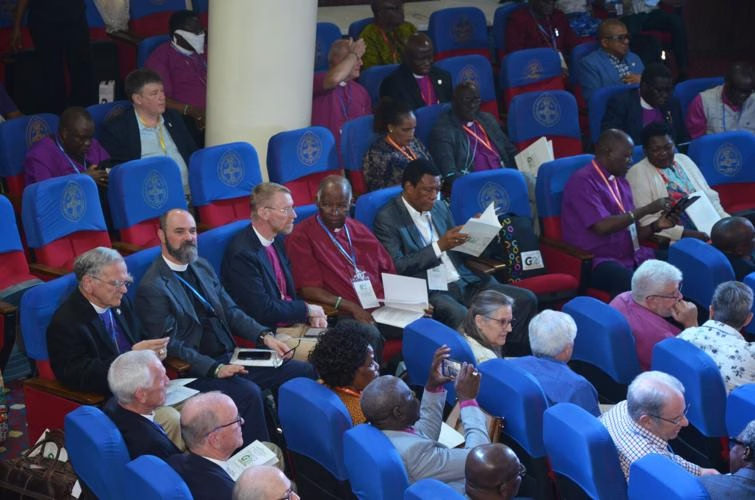
A group of conservative Anglican leaders has announced a significant restructuring of their global organization, marking a major shift away from long-standing traditions within the worldwide Anglican community.
The restructuring effort is being led by leaders connected to the Global Anglican Future Conference, a coalition of conservative Anglican churches formed to uphold traditional interpretations of doctrine and church governance. The move reflects growing tensions within the broader Anglican Communion over theological differences and leadership authority.
A New Direction for Conservative Anglican Churches
Church leaders involved in the restructuring say the changes are intended to strengthen cooperation among conservative Anglican provinces and provide clearer leadership within the movement. The reorganization aims to streamline decision-making and reinforce shared commitments to traditional teachings on theology, marriage, and church governance.

According to officials, the restructuring will reshape the leadership structure of GAFCON, allowing its council and regional leaders to play a more direct role in guiding the movement’s future direction.
Supporters of the move say it will help ensure that conservative Anglican voices remain united and influential in shaping the future of Anglican Christianity worldwide.
Background of Growing Divisions
Divisions within the Anglican world have been building for years, particularly over issues such as the ordination of LGBTQ clergy, same-sex marriage, and broader debates about biblical interpretation.
Many conservative Anglican leaders believe that some branches of the Anglican Communion have moved away from traditional doctrine. As a result, groups aligned with GAFCON have increasingly sought to develop alternative structures for cooperation and leadership.
While the Anglican Communion, historically led by the Justin Welby, remains the symbolic center of Anglicanism, conservative leaders argue that the current framework no longer adequately represents the theological views of many Anglican churches, particularly in Africa, Asia, and parts of the Global South.
Implications for the Global Church
The restructuring could have long-term implications for unity within the Anglican world. Analysts say the move signals a continued shift toward a more decentralized Anglican landscape, where regional alliances and theological networks may play a larger role than traditional structures.
Some church observers see the development as part of a broader realignment in global Christianity, as churches in the Global South increasingly influence theological debates and leadership within major Christian denominations.
Despite the changes, leaders involved in the restructuring have said they remain committed to dialogue with other Anglican groups, even as they pursue a clearer and more independent organizational path.
For many Anglicans, the restructuring represents both a moment of uncertainty and a reflection of deep divisions that have been reshaping the church for more than two decades.
Swifteradio.com
