
Canada will not make direct payments into the European Union’s general budget under Prime Minister Mark Carney’s proposed closer partnership with the bloc, Canada’s ambassador-designate to the EU, Jonathan Wilkinson, says.
Wilkinson said Canada would be selective about any financial contributions tied to specific European programs and emphasized that the proposal does not amount to EU membership for Canada.
His comments come as Carney pushes for a deeper and more strategic relationship between Canada and the 27-member European Union, including cooperation on trade, defence, critical minerals, artificial intelligence, energy security and financial services.
One area where Canada has already committed funding is the EU’s Security Action for Europe (SAFE) program, a €150-billion loan facility supporting joint defence procurement. Canada signed an agreement in February 2026 allowing it to participate as a third-country partner.

Wilkinson said potential Canadian funding would instead be considered for specific strategic areas where cooperation could provide tangible benefits. He cited opportunities involving defence, critical minerals and digital technologies, including artificial intelligence and computing capacity.
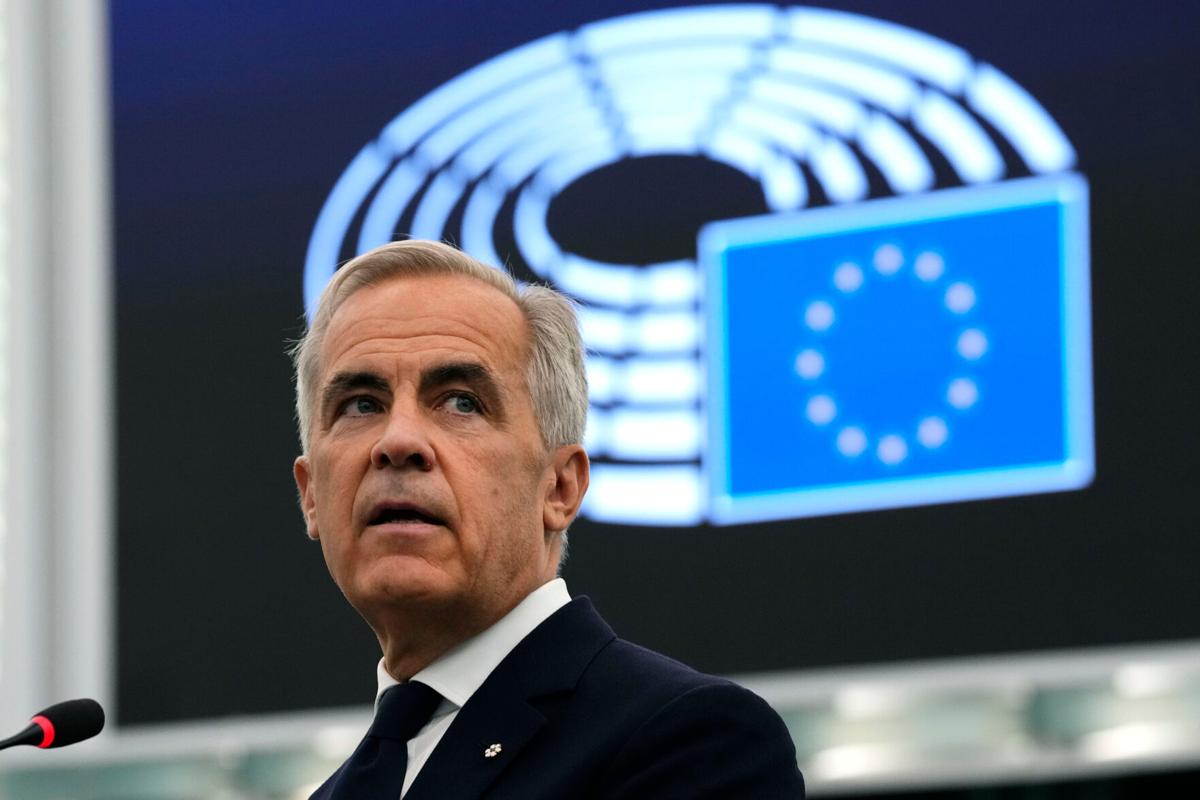
Carney formally outlined his vision for a stronger Canada-EU relationship during a speech at the European Parliament in September. His proposals include expanding digital trade in non-agricultural goods and services, seeking Canadian participation in the EU’s next-generation Horizon research and innovation program, and exploring closer cooperation in financial services.
The prime minister has also promised that Canadians and Parliament will have an opportunity to debate and vote on the structure of any future alliance.
The proposed partnership comes as Canada seeks to diversify its economic and strategic relationships amid continuing uncertainty in its traditional relationship with the United States. U.S. President Donald Trump has criticized closer Canada-EU ties and warned that such a move could be viewed as hostile if it threatens U.S. interests.
Wilkinson, however, said Canada’s approach is focused on cooperation in selected strategic sectors rather than becoming an EU member or creating a rival political bloc.
Canada and the EU already have extensive economic and institutional ties through the Comprehensive Economic and Trade Agreement (CETA). The two sides have also been expanding cooperation on security, defence, critical minerals, climate policy and digital transformation.
The latest clarification is likely to be closely watched as Ottawa and Brussels work to determine the details of Carney’s proposed Canada-EU strategic alliance.
Swifteradio.com
