Sweden’s next government remains uncertain after a closely contested national election left the center-left opposition with only a narrow lead over the governing right-wing bloc.
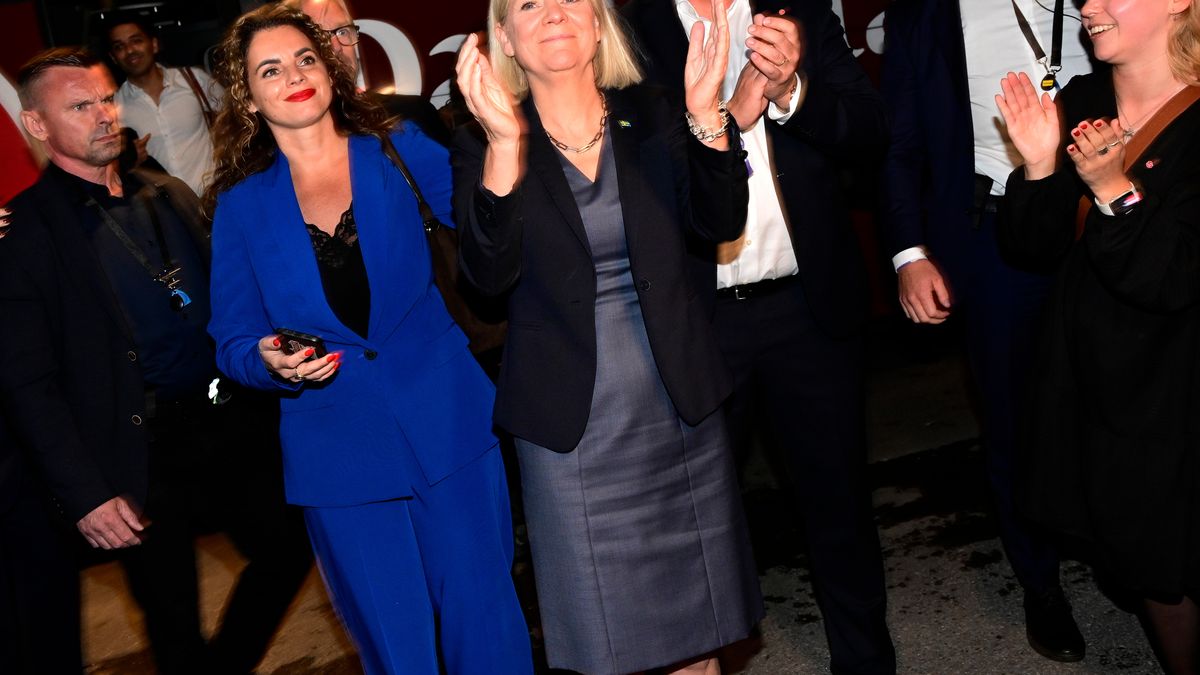
Preliminary results show the opposition, led by former Prime Minister Magdalena Andersson, holding a tentative advantage of 176 seats to 173 in the 349-seat Riksdag. The result is still subject to final counting, including late-arriving and overseas ballots.
Andersson’s Social Democrats remained the largest party, winning just over 28% of the vote. However, the party lost support compared with the previous election and recorded its weakest performance in decades, making coalition negotiations particularly important.
The narrow margin means that even if the left-leaning bloc ultimately secures the parliamentary advantage, forming a stable government could prove difficult. The opposition includes parties with differing positions on economic policy, taxation and other domestic issues, creating potential challenges for Andersson.

Prime Minister Ulf Kristersson, whose center-right government currently holds power, has indicated that he will consider possible options for forming a government despite the preliminary result favoring the opposition. The close contest could therefore lead to prolonged negotiations before Sweden has a clear governing coalition.
The election also produced a setback for the Sweden Democrats, a hard-right anti-immigration party that has supported Kristersson’s government. The party fell to third place and lost support compared with its previous performance, weakening expectations that it could gain a larger role in government.
The outcome could mark a shift in Swedish politics after several years of movement toward the right, particularly on immigration and law-and-order policies. However, analysts caution that a change in the parliamentary balance does not automatically guarantee a return to Sweden’s previous approach to immigration.
With the final result still pending, Sweden faces an uncertain political period. The coming coalition talks could determine whether Andersson returns as prime minister or whether Kristersson and the right-wing bloc find a path to remain in power.
Swifteradio.com
