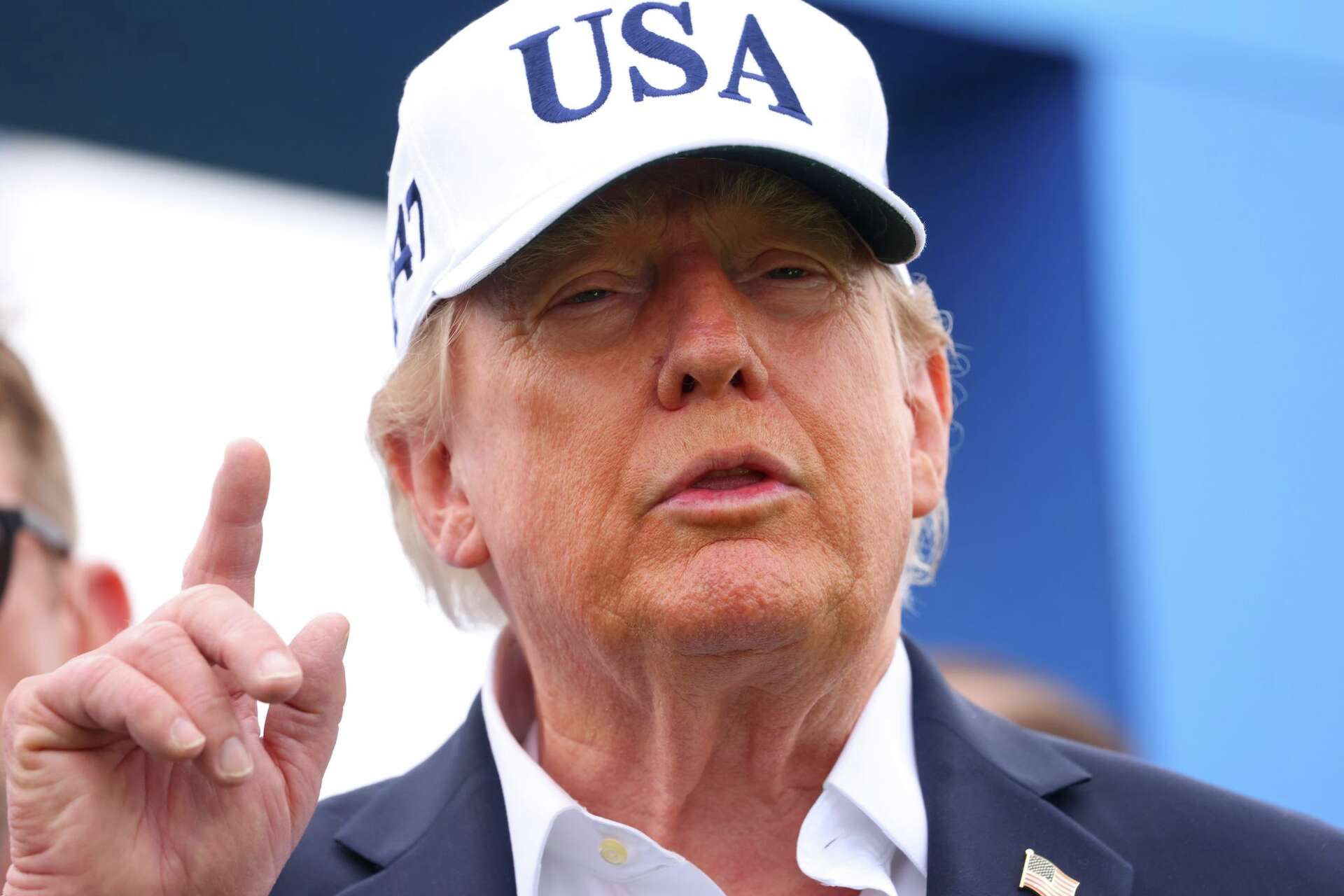
U.S. President Donald Trump is pushing back against calls for tighter controls on artificial intelligence, arguing that the United States must avoid slowing its AI industry and risk surrendering its technological advantage to China.
Speaking during a visit to Ireland, Trump said he believes concerns about the rapid development of artificial intelligence are being overstated. He acknowledged that some regulation may be necessary but rejected calls for broad restrictions that could limit the industry’s growth.
Trump’s position comes as concerns over the potential risks of increasingly powerful AI systems are gaining attention among technology leaders, researchers and policymakers. Anthropic CEO Dario Amodei has called for a slower pace of AI development, while OpenAI CEO Sam Altman and Elon Musk have also backed calls for greater caution.
The debate reflects a growing tension between AI safety and technological competition. Trump has framed artificial intelligence as a critical area of global competition, particularly with China, and has argued that maintaining U.S. leadership is essential for economic and national security.

The president’s comments come as lawmakers in Washington consider how much government oversight should be placed on an industry developing at extraordinary speed. Members of both political parties have expressed support for some form of AI guardrails, although there remains significant disagreement over how extensive those regulations should be.
Trump’s administration has generally favored a lighter regulatory approach to AI, emphasizing innovation and American technological leadership. The White House has previously promoted a national framework intended to reduce regulatory barriers and strengthen the U.S. position in artificial intelligence.
Critics of a hands-off approach warn that rapidly advancing AI could create serious risks involving cybersecurity, misinformation, job displacement and the possibility of highly capable systems becoming difficult to control. Supporters of faster development, however, argue that excessive regulation could allow China and other international competitors to gain an advantage.
The issue is becoming increasingly important as governments and technology companies race to develop more advanced AI systems and secure access to the enormous computing infrastructure needed to train them.
Trump’s latest remarks therefore highlight a central question facing U.S. policymakers: how can Washington protect the public from emerging AI risks without slowing innovation enough to fall behind China?
The debate is expected to intensify as Congress, technology companies and AI researchers continue discussions over the future of artificial intelligence regulation in the United States.
Swifteradio.com
