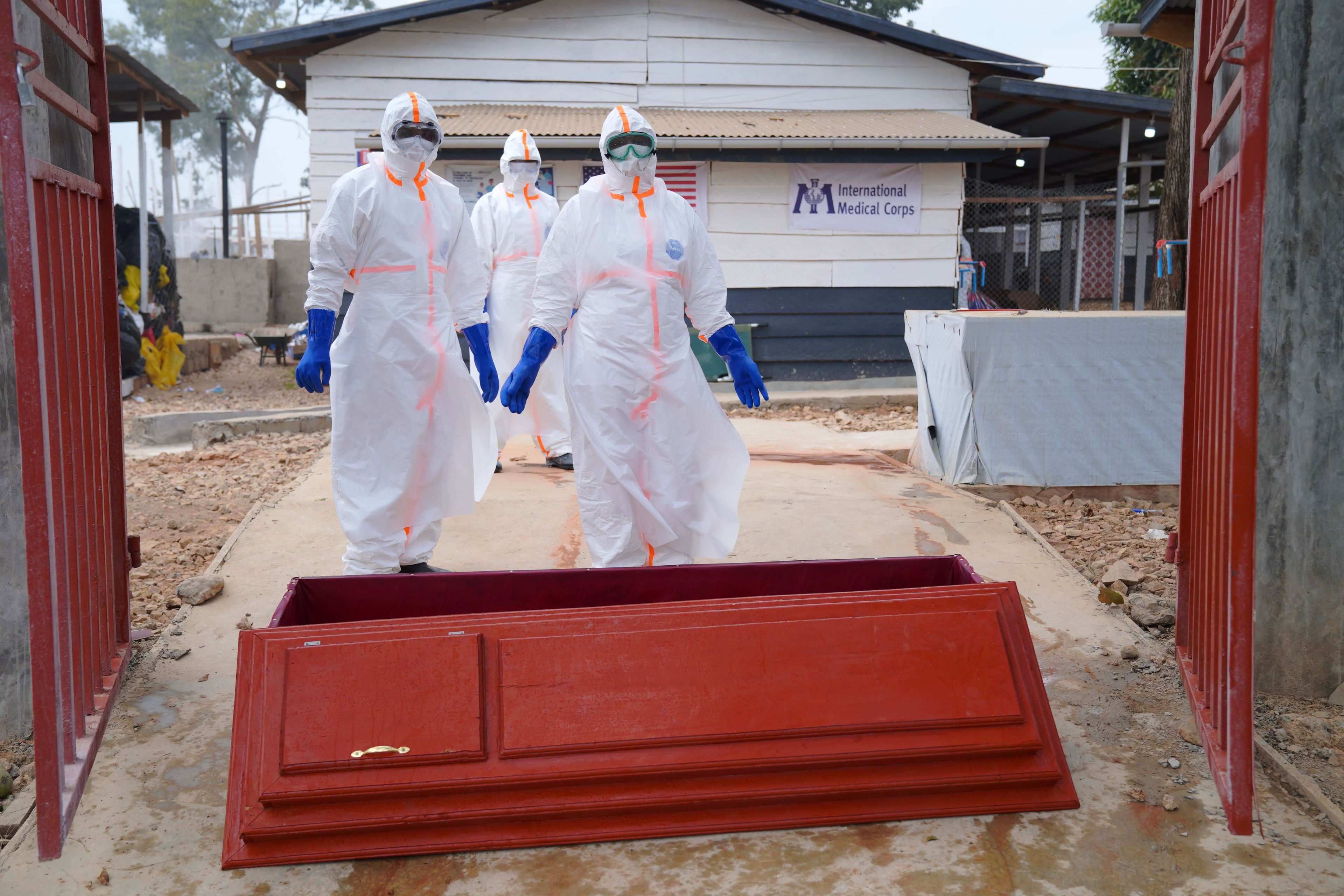
Burial teams in the Democratic Republic of Congo’s Ituri province are facing mounting pressure as they work to safely bury victims of the country’s rapidly expanding Ebola outbreak.
The teams are responsible for handling and disinfecting bodies, preparing coffins and conducting burials under strict infection-control procedures. Their work is essential because Ebola can remain highly infectious in the bodies of people who have died from the disease.
The outbreak has placed extraordinary demands on frontline workers. According to recent reports, the epidemic has killed nearly 3,200 people among more than 6,500 confirmed cases, making it the deadliest Ebola outbreak recorded in the country. The virus has spread across six provinces, while conflict, displacement and population movement are making containment more difficult.
Burial teams are also facing anger from grieving families who are unable to perform traditional funeral rituals. Health protocols require trained workers to handle the bodies, meaning relatives may be prevented from touching or preparing their loved ones for burial.

That restriction has fueled mistrust and, in some cases, confrontations and attacks against burial teams. Health officials say such incidents are further complicating an already difficult response.
For many families, the restrictions are emotionally painful. Relatives have described being unable to carry out customary final rites or even touch the coffins of loved ones who died from Ebola.
At the same time, burial workers say they are struggling with physical exhaustion and the psychological strain of repeatedly working around Ebola deaths. Some workers have also faced concerns from their own families about the possibility of bringing the virus home.
The response is further complicated by insecurity in eastern Congo, weak health infrastructure, population displacement and gaps in contact tracing and laboratory testing. Frontline health workers have also staged strikes over unpaid wages, adding another challenge to efforts to contain the outbreak.
The current outbreak is being driven by the Bundibugyo strain of Ebola, for which there is currently no approved vaccine or treatment specifically targeting the strain. Congo has begun vaccinating frontline health workers with the Ervebo vaccine, although its effectiveness against Bundibugyo Ebola remains uncertain.
Health experts say controlling the outbreak will require more than medical interventions. Building trust with affected communities, respecting families’ grief, protecting healthcare workers and addressing misinformation will be critical to breaking chains of transmission.
The growing pressure on burial teams highlights one of the most difficult realities of the crisis: containing Ebola requires frontline workers to protect communities while working through fear, grief, exhaustion and sometimes hostility.
Swifteradio.com
