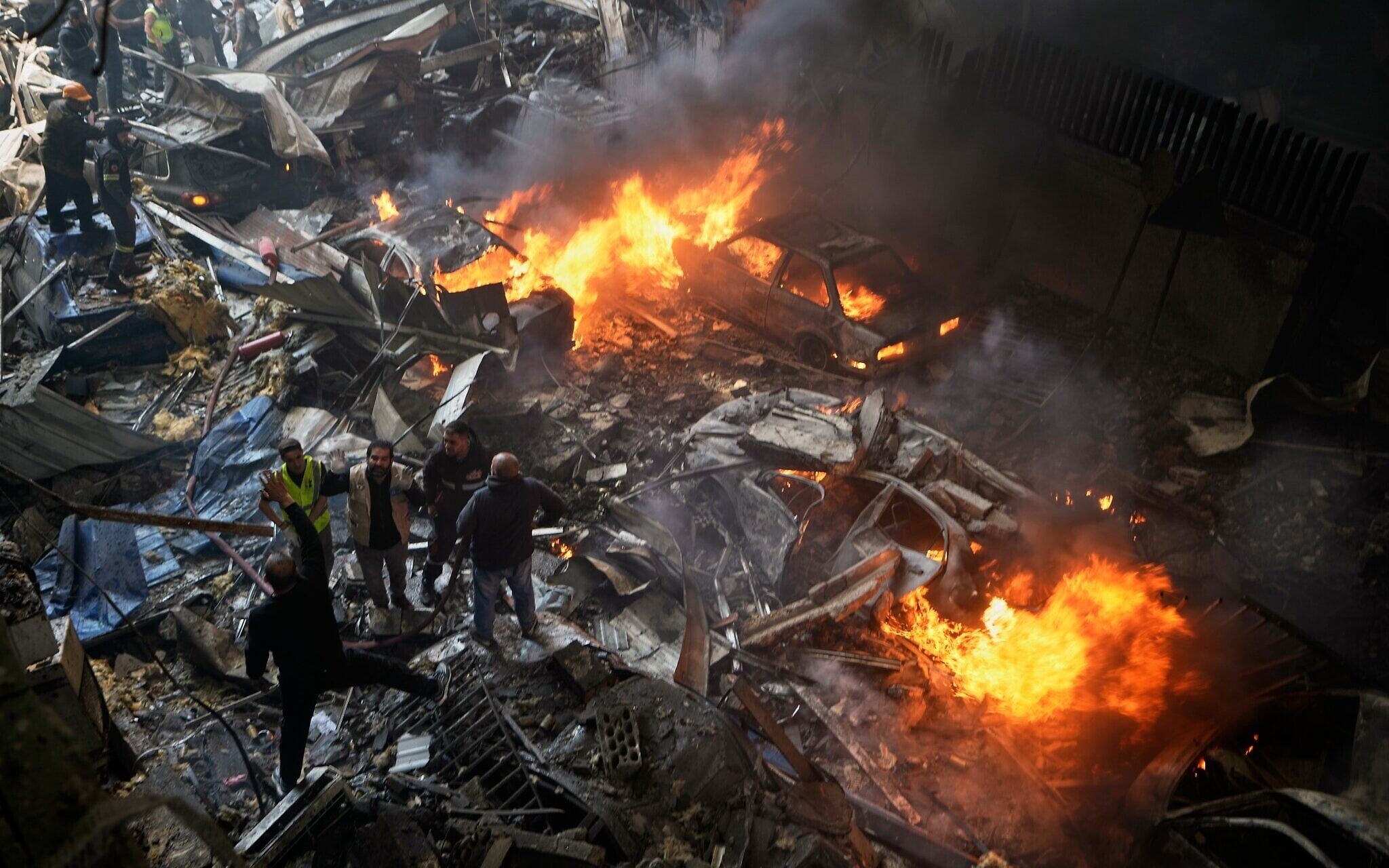
Israel has launched one of the largest waves of airstrikes in its ongoing conflict with the Lebanese armed group Hezbollah, striking more than 100 targets across Lebanon in a rapid series of attacks that lasted about 10 minutes.
The strikes targeted Hezbollah command centres and military sites in multiple areas, including the southern suburbs of Beirut, southern Lebanon and the eastern Bekaa Valley.
Lebanon’s health ministry said at least 182 people were killed and 890 others wounded in the attacks, warning that the death toll could rise as rescue operations continue.
Hours after the strikes, emergency workers were still searching through damaged buildings in Beirut. Among the debris were family photos, clothing and unfinished schoolwork, offering a stark reminder of the civilian lives disrupted by the bombardment.

Abdelkader Mahfouz, who was visiting his wounded brother at the scene, described the devastation.
“There was a lot of body parts here. Only people are getting harmed. What should the people do? We can’t do anything,” he told the BBC.
The escalation comes despite a recently announced ceasefire between Iran, the United States and Israel, which was brokered with help from Pakistan. Israeli officials have made clear that the agreement does not apply to the conflict with Hezbollah in Lebanon.
Israeli Prime Minister Benjamin Netanyahu’s office rejected claims that Lebanon was included in the ceasefire terms. In Washington, U.S. President Donald Trump’s press secretary Karoline Leavitt also confirmed that Lebanon was not part of the deal.
Hezbollah has not claimed any new attacks since the ceasefire announcement but warned that it retains the right to respond. The group also cautioned displaced families not to return to their homes until a formal ceasefire specifically covering Lebanon is announced.
The Lebanese presidency said it would continue diplomatic efforts to ensure the country is included in any broader regional peace arrangements.
The latest surge in violence is part of a long-running conflict between Israel and Hezbollah that intensified after the militant group fired rockets into Israel earlier in the war. The attack came in response to the killing of Iran’s Supreme Leader Ayatollah Ali Khamenei and ongoing Israeli strikes in Lebanon.
Since the war escalated, Lebanon’s health ministry says more than 1,700 people have been killed, including at least 130 children. The ministry does not distinguish between civilians and combatants in its casualty figures.
Israel says it has killed around 1,100 Hezbollah fighters during the conflict.
The war has also triggered a massive humanitarian crisis. More than 1.2 million people — roughly one in five residents of Lebanon — have been displaced, most of them from Shia Muslim communities in the south.
Entire villages near the Israeli border have been heavily damaged or destroyed as Israeli ground forces attempt to create what officials describe as a security buffer zone designed to push Hezbollah fighters away from the frontier and dismantle their infrastructure.
The strategy has raised fears that parts of southern Lebanon could remain under Israeli control even after the war ends, leaving many displaced residents uncertain about whether they will ever be able to return home.
Despite the ongoing offensive, some Israeli military sources have suggested the army does not plan to push its ground invasion deeper into Lebanon. Officials have reportedly acknowledged that completely disarming Hezbollah through military force alone may not be possible.
