Several Gulf Arab states have intercepted a new wave of missiles and drones launched from Iran, as Tehran warned it could expand its military campaign across the Middle East amid the escalating regional conflict.
Authorities in countries including Saudi Arabia, United Arab Emirates, Qatar and Bahrain reported activating air defense systems after detecting incoming missiles and unmanned aerial vehicles believed to have been launched from Iranian territory.
Officials said most of the projectiles were intercepted before reaching their intended targets, although falling debris and occasional impacts have caused damage in some areas.
Regional Air Defenses Activated

Defense ministries across the Gulf confirmed that missile defense systems were deployed to counter the latest attacks. Air raid sirens sounded in several cities as authorities worked to intercept the incoming threats.
Regional defense reports indicate that hundreds of drones and missiles have been launched since the conflict escalated, with many intercepted by air defense systems operated by Gulf states and their allies.
Despite the interceptions, some attacks have caused casualties and infrastructure damage in parts of the region.
Iran Signals Potential Expansion of Conflict
Iranian officials have warned that the country could widen its military campaign if attacks against its territory continue.
The conflict intensified after joint strikes by the United States and Israel targeted Iranian military and nuclear facilities earlier this year. Since then, Iran has launched multiple waves of retaliatory attacks aimed at Israel and U.S.-linked assets across the region.
Tehran has also issued warnings to countries hosting American military bases, suggesting they could become targets if the conflict escalates further.
Strategic Locations Under Threat
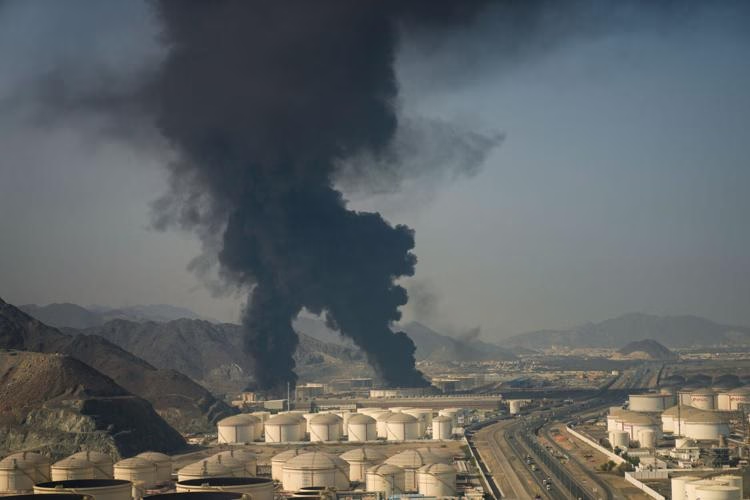
Many of the attacks have focused on strategic military installations, energy facilities, and transportation infrastructure in the Gulf region.
Security experts warn that continued strikes could threaten critical energy supplies and disrupt major shipping routes, particularly near the Strait of Hormuz.
The waterway is one of the world’s most important oil transit corridors, carrying a significant portion of global energy exports.
Rising Global Concerns
The growing conflict has alarmed international observers who fear that continued escalation could draw additional countries into the fighting.
Governments around the world are closely monitoring developments as diplomatic efforts attempt to prevent further deterioration of the security situation.
Analysts warn that if hostilities continue to expand across the Gulf region, the conflict could have far-reaching consequences for global energy markets, international trade, and regional stability.
Swifteradio.com
